

Decentralized Web Magic
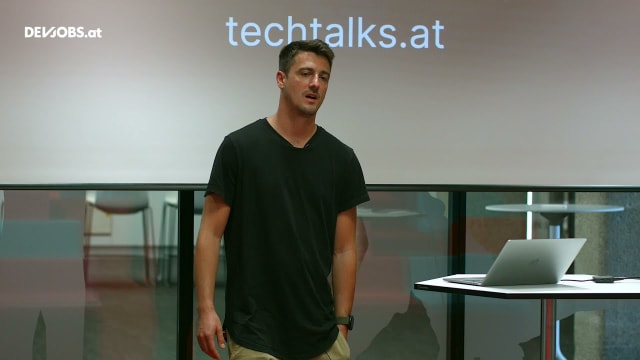
Nico Reindl zeigt in seinem devjobs.at TechTalk das Prinzip der Decentralization anhand von Hash Functions und Merkle Trees.
Video summary
In Decentralized Web Magic, Nico Reindl contrasts host-based URLs with content-based addressing using hash functions, enabling links that don’t depend on where data is hosted. He demonstrates splitting files into chunks and verifying them from untrusted peers via Merkle trees and a trusted root hash, enabling trustless distribution and partial validation. Viewers can apply these ideas to build consistent links and efficient, verifiable data retrieval, as seen in systems like IPFS, Ethereum, uTorrent, and Bitcoin.
Decentralized Web Magic: How Hashes and Merkle Trees Turn Cat Videos into Trustless, Location-Independent Links
Introduction: From a cat video to a decentralized architecture
In “Decentralized Web Magic” by Nico Reindl (DEVJobs.at), everything starts with something familiar: sharing a cat video. You tap “share,” get a link, and send it to a friend. That tiny flow exposes two core premises of the centralized web: content lives on a single hosting entity, and links are tied to that host. In the example, that entity is YouTube. The URL points at youtube.com/… — the address reflects the host, not the content.
This makes things convenient but also brittle. If you want the same video on another platform, you re-upload it and receive a new link. Now the same content exists twice — once on YouTube, once on Instagram — and the two links aren’t interchangeable. They’re platform artifacts, not content identities.
Nico Reindl asks a sharper question: “What if I told you you can upload it to the internet without hosting it on YouTube or Instagram, and you only have one link you need?” That question shifts attention to the talk’s core: content-based addressing, realized with hash functions and verified with Merkle trees. This is the “magic” of the decentralized web — a mechanism that decouples links from storage locations while establishing trust among unknown peers.
Host-based addressing: Convenient, but tied to location
In the centralized model, a URL reflects a host. The address depends on where the content lives (e.g., youtube.com). Consequences include:
- Content is bound to a specific operator (e.g., YouTube).
- Moving platforms means re-uploading and receiving a new link.
- Links mirror platforms rather than the identity of the content itself.
For engineers, the friction shows up as duplication, redundant uploads, and an unnecessary coupling between content and infrastructure decisions. It’s not just operational overhead; it’s an architectural constraint.
Content-based addressing: Making content its own address
The proposed alternative anchors the address in what the content is rather than where it is. The key tool is the hash function.
“A hash function takes an input and produces a fixed length output, typically 32 bytes.”
Two behaviors matter in practice and are emphasized in the talk:
- Same input → same output.
- Different input → different output.
From that, a simple but powerful idea follows: treat the hash as the address. If different inputs never yield the same output, a hash becomes a unique identifier. The address no longer depends on a host; it derives from the content itself. That’s the decoupling the centralized web lacks.
Peer-to-peer distribution: Sharing without a central authority
In a peer-to-peer (P2P) network, “everyone can participate anonymously,” and peers are “untrusted.” Content can be split into pieces and distributed across many nodes. In the talk’s example, a video is split into four parts and scattered around the network. No single platform or server owns the content; any peer can hold and serve parts.
The obvious question is trust: “Can we trust strangers on the internet?” To ensure integrity without a central authority, we need a cryptographic verification mechanism. That’s where Merkle trees enter.
Merkle trees: Verifying data across peers
“Merkle trees allow data verification across peers.”
A Merkle tree is essentially a binary tree whose nodes hold hashes, not raw values:
- Leaf nodes are the hashes of the actual data chunks (e.g., the video segments).
- Each parent node is computed by concatenating the hashes of its two children and hashing the result.
- Repeating this procedure up the tree yields a single root hash at the top.
This is powerful because even a tiny change at a leaf causes the root to change. The root hash, therefore, is a compact, unique representation of the entire dataset. If two roots match, the datasets are the same — fully.
Building a four-part Merkle tree
The talk walks through a four-chunk example:
- Hash each of the four chunks → four leaf nodes.
- Pair the leaves: concatenate their hashes and hash again → two parent nodes.
- Combine the parents the same way → a single root node.
The result is a unique root hash that represents the entire video purely via hashes of the data, not the data itself.
A trust anchor: Get a root from someone you trust
How do we verify data pulled from an untrusted P2P network? Nico Reindl outlines a clean flow:
- Obtain a root hash from a trusted party (in the talk, that’s “Bob,” your friend). This single value is your trust anchor.
- Ask the network who has data associated with that root.
- Receive the pieces from peers.
- Reconstruct the Merkle tree locally by re-hashing the received chunks and their parent nodes.
- Compare the computed root with the root you received from Bob.
If the two roots match, “you can be 100% sure” the files you assembled are exactly the ones you intended to download. The network remains untrusted; verification happens cryptographically via the tree structure and the properties of hashing.
Why a tree instead of a single hash?
Nico Reindl addresses the natural question: Why not just hash everything as one big blob? That would also prove integrity.
The example from the talk: “Say you have 1000 files and you only need two of them.”
With a single big hash, you’d have to download all 1000 to re-compute and check integrity. Merkle trees solve this by enabling partial validation:
- You only need the requested files and the relevant parent nodes up to the root.
- You then compare the computed root to your trusted root.
This avoids unnecessary transfers. For engineers, the lesson is straightforward: structure your data so you can verify just what you use, exactly when you need it.
Where it shows up: Systems mentioned in the talk
The session name-checks prominent systems that use Merkle trees:
- Interplanetary File System (IPFS)
- Ethereum (a cryptocurrency)
- uTorrent
- Bitcoin
For Bitcoin, the talk highlights the blockchain with blocks that contain transactions, and a Merkle tree is used within these blocks. The mechanism aligns perfectly with the verification properties discussed above.
Engineering narrative: From identity to trust
The session’s technical storyline maps 1:1 to architectural choices:
- Host-based addresses couple content to infrastructure; moving platforms implies re-uploads and duplicate links.
- Content-based addressing swaps location for identity: the hash becomes the address.
- P2P spreads data across untrusted peers; a verification mechanism must replace a central trust anchor.
- Merkle trees provide that verification with a single, compact root for the whole dataset and efficient partial checks for subsets.
Together, this becomes the backbone of the “decentralized web magic” presented in the talk.
A step-by-step application flow for builders
While the session doesn’t show code, the operational steps are crisp and reusable:
- Establish hashing as your identity layer
- Hash each file or data chunk (fixed-length output, typically 32 bytes, as the talk notes).
- Treat the hash as the content’s address.
- Split large content into chunks
- Segment large assets (as with the four-part video in the talk).
- Hash each segment individually.
- Construct a Merkle tree
- Concatenate and hash pairs of chunk hashes, repeating until you obtain a root.
- The root uniquely represents the whole dataset.
- Exchange a trusted root
- Obtain the root from a trusted party (the talk’s example is “Bob”).
- This single value is all you need to trust.
- Retrieve from untrusted peers
- Query the P2P network for pieces associated with the root.
- Fetch both the requested chunks and the relevant parent nodes.
- Verify locally
- Rebuild the tree from the received pieces and re-hash.
- Compare the computed root to the trusted root.
- Use partial validation whenever possible
- Pull only the chunks you need plus the minimal set of parent nodes up to the root.
- Avoid full downloads unless your use case requires the entire dataset.
This workflow is the bridge from an untrusted network to trustworthy results — with no central gatekeeper.
Terms to internalize from the session
It’s helpful to lock in the vocabulary exactly as used in the talk:
- Hash function: A deterministic mapping from input to fixed-length output (typically 32 bytes). Same input yields the same output.
- Uniqueness in practice: “You never get the same output from two different inputs,” which is why hashes can serve as addresses.
- Content-based addressing: The address depends on the content, not the host.
- Host-based addressing: The address depends on the location (e.g., youtube.com/…).
- Peer-to-peer: Many anonymous, untrusted peers; anyone can participate.
- Merkle tree: A binary tree where leaves are data hashes and internal nodes are hashes of concatenated child hashes; the root represents the full dataset.
- Root hash: A compact, unique fingerprint of the entire content — the trust anchor.
- Partial validation: Fetch just the files you need and the minimum set of parent nodes; verify against the root.
Practical outcomes: Consistent links and trustless distribution
The talk closes with a concise summary we can translate directly into engineering outcomes:
- Content-based addressing yields consistent links regardless of where content is stored.
- Merkle root hashes enable efficient verification — both full and partial.
- Combined, they make “trustless” distribution workable: untrusted peers can serve data, and clients can still be certain about integrity.
These are more than ideas; they describe a reusable pattern visible across systems — from IPFS to Bitcoin — as cited in the talk.
A mental model for architectural decisions
From the DEVJobs.at editorial seat, the session leaves us with a compact mental model:
- When the address equals the content’s identity, location stops mattering.
- When peers are untrusted, structure (the Merkle tree) carries the burden of proof.
- When only one root needs to be trusted, distribution can scale freely: anyone can serve; few must be trusted.
- When subsets are common, a Merkle tree enables precise, selective integrity checks.
These aren’t implementation details; they’re design constraints that steer systems toward the “magic” the talk highlights.
Quotes and phrasing that stick
A few lines from “Decentralized Web Magic” capture the core succinctly:
“Welcome to Decentralized Web Magic.”
“It’s all about hash functions.”
“You never get the same output from two different inputs … you can use them as addresses.”
“Merkle trees allow data verification across peers.”
“If they are the same, you can be 100% sure they are exactly the files you needed.”
“What trees allow you to do is partial validation.”
These lines form the vocabulary of decoupling identity from location and establishing trust without central authority.
Conclusion: The essence of the decentralized magic
“Decentralized Web Magic” by Nico Reindl (DEVJobs.at) takes us from a cat video to the construction principle of content-based addressing — and from there to verification via Merkle trees. The storyline is tight:
- Host-based addresses bind content to platforms and locations.
- Hash functions turn content into an identity — and thus an address — independent of hosts.
- P2P distribution relies on untrusted peers; verification replaces centralized trust.
- Merkle trees anchor that verification in a single root and enable partial validation.
The session’s distilled takeaways drive the point home: consistent links through content-based addressing, efficient verification with root hashes, and trustless distribution across the network. That combination explains why we already see the pattern in systems like IPFS, Ethereum, uTorrent, and Bitcoin. For engineers, it’s less magic than a precise design pattern: address, distribute, verify — without central control and with maximum integrity.
More tech talks
Supercharge your JavaScript
Nico Reindl verrät in seinem devjobs.at TechTalk einige coole Tricks, mit denen man das Entwickeln in JavaScript einfacher gestalten kann.Die TechTalk Days
Klemens Schreiber erzählt in seinem devjobs.at TechTalk den Werdegang des Karriereportals und den Hintergrund der TechTalk Days.